
In today’s fast-evolving digital landscape, Artificial Intelligence (AI) has become a transformative force reshaping industries across the world. With a wealth of opportunities on offer, AI has the ability to streamline operations, enhance customer experiences and in the end increase a businesses bottom line. However, many leaders still struggle with the complexities of the fundamentals and how to apply AI effectively within their organisations. This guide provides a beginner-friendly introduction to AI and its relevance in modern business.
What Is AI?
At its core, AI refers to the simulation of human intelligence by machines. This includes the ability to learn, reason, problem-solve, and make decisions. AI enables computers and other systems to perform tasks traditionally requiring human intelligence, such as recognising speech, analysing data, or identifying patterns.
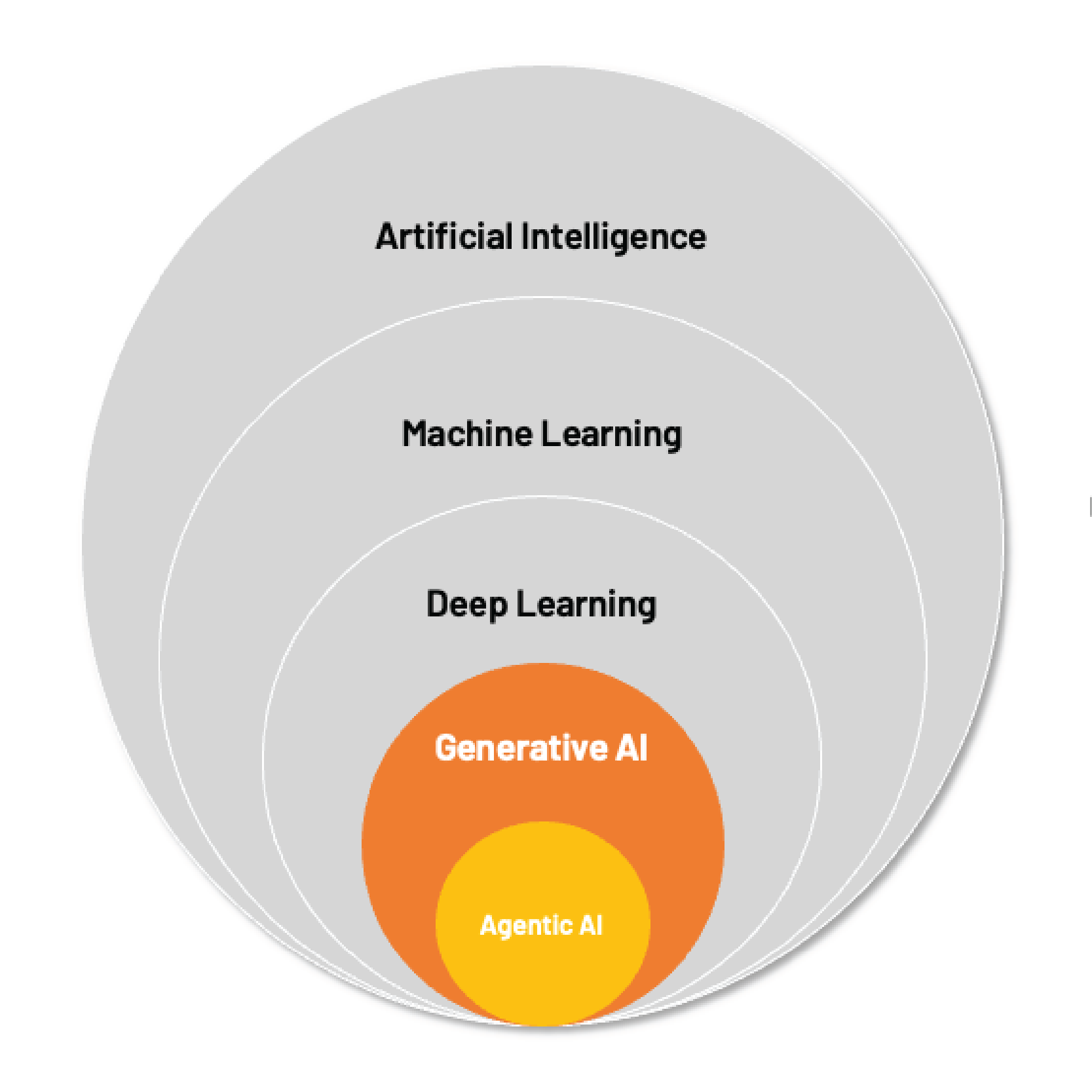
Key Concepts
- Machine Learning (ML): Algorithms that learn from data and improve over time.
- Deep Learning (DL): A subset of ML that uses neural networks to mimic the human brain.
- Natural Language Processing (NLP): Enables machines to understand and generate human-like language.
- Computer Vision: Teaches computers to interpret their surroundings through visual data such as images and video.
The History of AI
AI isn’t a new concept. Its roots date back to the 1950s when pioneers like Alan Turing and John McCarthy first explored the possibility of machines performing human tasks. However, it’s only in recent years that AI has truly exploded, thanks to significant advancements in computing power and the availability of massive amounts of data.
Why Does AI Matter for Business?
For business leaders, AI is more than just a buzzword; it’s a tool for gaining a competitive edge. Here’s why it matters:
Automation
AI-enabled systems can significantly reduce manual labour, saving both time and cost.
Insight
Rapidly assimilate large datasets to uncover trends and predict outcomes far quicker than humanly possible.
Personalisation
Businesses can automatically deliver highly tailored and responsive experiences to every unique customer.
Competitive Edge
Your competitors are already deploying these systems... you should too, or you’ll be left behind.
Common Business Applications of AI
AI has diverse applications across nearly all industries. These use cases depend on many factors, but for us, two of the most important ones within a company’s control are creativity and ambition. Whilst not exhaustive, below are a few examples:
Customer Service
- ChatBots: Automated customer interactions, providing first line analysis 24/7.
- Sentiment Analysis: Gauging customer satisfaction through social media, comments, or reviews.
Marketing and Sales
- Predictive Analytics: Forecasting customer behaviour.
- Recommendation Engines: Personalising product suggestions.
Operations
- Inventory Management: Optimising supply chains using real-time data.
- Process Automation: Streamlining repetitive tasks like invoice processing and document creation.
Human Resources
- Recruitment: Using AI algorithms to screen CV’s.
- Employee Engagement: Analysing workplace satisfaction.
Benefits and Challenges of AI
Core Benefits
- Efficiency: Automate repetitive tasks.
- Accuracy: Minimise human error in data analysis.
- Scalability: Manage large data volumes effortlessly.
- Innovation: Unlock new possibilities.
Core Challenges
- Bias: AI models can inherit human prejudices.
- Ethical Concerns: Issues like data privacy and job loss.
- Implementation Cost: High initial setup and maintenance.
- Skills Gap: Shortage of qualified AI professionals.
"With great power, comes great responsibility." Uncle Ben
Getting Started with AI in Business
1. Assess Your Needs
Start by identifying areas where AI can deliver the most impact. Some common areas include reducing operational costs, enhancing customer engagement, and generating business insights.
2. Evaluate Feasibility
Not all tasks are suited to AI. It’s important to use the right framework to weigh potential benefits against costs and maximise ROI.
3. Partner with Experts
Concentrate on doing what you do best in your day job. Collaborate with AI consultants or technology providers who will help guide implementation and navigate both technical and strategic challenges. (Did we mention this is what we do?)
4. Start Small
Begin with pilot or pathfinder projects to ‘test the waters’ before scaling AI initiatives across your organisation.
So What’s in It for You…
Well to put it frankly, everything. As AI continues to rapidly evolve and further advancements in generative models, autonomous systems, and ethical AI frameworks emerge, you can stay ahead of the curve instead of being behind it.
AI is no longer classified as a ‘luxury’. It’s a necessity for businesses aiming to thrive in a competitive landscape. By understanding the basics, exploring real-world applications, and applying the correct planning for implementation, your organisation can unlock the full potential of AI.
Ready to Take the Next Step?
Get in touch to discuss a tailored workshop or consultation and explore how AI can transform your business.
Start a Conversation